
KineMaster: Complete Guide, Features & Editing Tools 2026
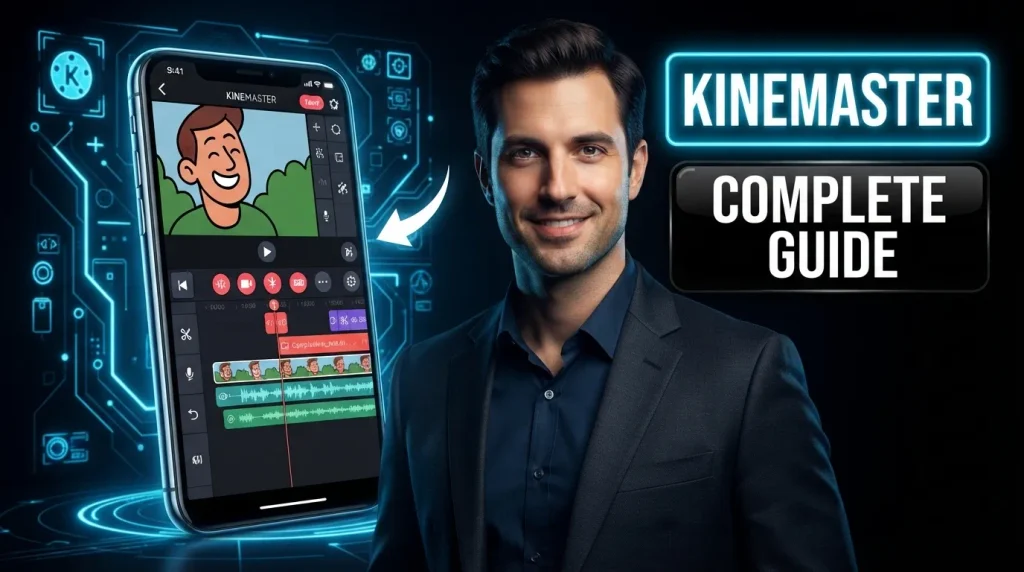
KineMaster: Complete Guide is a useful resource for creators who want to understand a mobile video editing application with a broad range of creative tools. KineMaster provides features for trimming, cutting, layering, transitions, audio editing, chroma key, effects, text, stickers, keyframes, and color adjustments. The app can be useful for beginners, social media creators, vloggers, students, and content creators who want greater control over their videos. Its combination of an accessible interface and advanced editing capabilities makes it suitable for many types of video projects photo and video editing apps.
What Is KineMaster
KineMaster: Complete Guide explains how KineMaster works as a mobile video editing application for creating, editing, and customizing videos directly from supported devices. It uses a timeline-based workflow where creators can arrange clips, remove unwanted sections, add audio, and combine multiple visual elements. Users can preview their projects while editing and make adjustments before exporting the final video. This makes the application useful for both simple and detailed editing tasks.
One of the main advantages explained in KineMaster: Complete Guide is its focus on providing advanced editing controls without requiring a traditional desktop editing setup. Beginners can start with basic trimming, splitting, transitions, and music, while experienced users can explore layers, chroma key, keyframes, effects, and detailed adjustments. The interface organizes many important controls around the editing timeline. This gives creators a practical way to manage different elements within one project.
KineMaster: Complete Guide also shows how the application can be used to create different types of content, including YouTube videos, Instagram Reels, short-form social media videos, tutorials, vlogs, presentations, product videos, and personal projects. Creators can combine video clips with images, text, stickers, music, voice recordings, and visual effects. The ability to control multiple elements makes the app useful for projects that require more than basic clip editing. It can also serve as a learning platform for users developing their video editing skills.
Timeline Editing and Multi-Layer Support
The timeline is a central part of KineMaster: Complete Guide because it gives creators control over the order and timing of their media. Users can import clips, trim sections, split footage, rearrange scenes, and remove unwanted parts. The timeline allows editors to see different elements in relation to one another while building the final sequence. This makes it easier to create a logical flow and maintain accurate timing.Creators who want to compare different mobile editing workflows can also explore VN Video Editor.
Multi-layer editing is another important capability covered in KineMaster: Complete Guide. Creators can place additional videos, images, text, stickers, graphics, and other elements over the primary footage. Each layer can be positioned and adjusted independently according to the requirements of the project. This is useful for picture-in-picture videos, reaction content, tutorials, presentations, overlays, and creative compositions. Multiple layers can be combined to produce more complex visual scenes.
Using layers effectively can significantly expand what creators can accomplish with KineMaster: Complete Guide. Instead of simply placing clips one after another, users can create compositions containing several visual elements at the same time. They can adjust the position, duration, size, and appearance of individual elements. This workflow gives creators more control over the structure and visual presentation of their videos.
Transitions, Effects and Filters
Transitions help connect different scenes smoothly and are an important part of KineMaster: Complete Guide. KineMaster provides transition options that can be applied between clips to create different types of scene changes. Simple transitions can provide a clean appearance, while more dynamic options can add energy to social media content. The right transition depends on the pace, subject, and style of the video.
Effects and filters provide additional ways to change the appearance of footage. Filters can influence colors and overall mood, while visual effects can add movement, distortion, lighting, textures, and other creative elements. These tools can be useful for cinematic projects, travel videos, music edits, promotional videos, and short-form content. Creators can experiment with different combinations to develop a visual style that fits their project.
Using too many effects can make a video difficult to watch, so controlled editing is often more effective. KineMaster: Complete Guide highlights how users can combine transitions, filters, and effects with other editing tools to create a balanced result. Creators can apply effects to specific sections rather than changing the entire video. This selective approach can help emphasize important moments while keeping the overall composition clear.
Chroma Key and Background Editing
Chroma key is one of the notable features discussed in KineMaster: Complete Guide, especially for creators interested in more advanced mobile editing. It allows creators to remove a selected color from footage, commonly a green or blue background, and replace it with another visual layer. This technique is widely used in tutorials, gaming videos, presentations, entertainment content, and creative projects. Proper lighting and a suitable background can improve the quality of the result.
After removing the selected background color, creators can place another video or image behind the subject. For example, a presenter can appear in front of a presentation graphic, a gamer can be shown over gameplay footage, or a person can be placed into a different environment. The background and foreground can be adjusted separately through the layer system. This creates opportunities for more sophisticated compositions.
Successful chroma key editing requires attention to lighting, shadows, clothing, and background consistency. KineMaster: Complete Guide explains how creators can refine their chroma key results by paying attention to these factors. Uneven lighting can make parts of the background difficult to remove cleanly. Combining chroma key with masks, layers, and other adjustments can produce more convincing compositions.
Keyframes and Motion Control
Keyframes allow creators to control changes in an element over time, making them an important topic in KineMaster: Complete Guide. A creator can establish an initial position or setting and then define another setting later in the timeline. The application can create the transition between these points, producing controlled movement. This approach gives editors more control than using a fixed animation preset.
Keyframes can be used for zoom effects, moving images, animated text, rotating elements, and other creative movements. For example, a photograph can slowly move toward the center of the screen while increasing in size. Text can also travel across the frame or change its position during a particular section of a video. These techniques can make static elements more visually engaging.
Learning keyframes can help creators move beyond simple preset effects. KineMaster: Complete Guide shows how users can determine when movement starts, how long it continues, and where the element finishes. With practice, creators can combine keyframes with transitions, effects, and layers to produce more customized animations. This makes keyframe editing valuable for users who want to develop their motion design skills.
Audio Editing, Voiceovers and Music
Audio plays a major role in the overall quality of a video, and KineMaster: Complete Guide covers the importance of managing different audio elements. KineMaster allows creators to add music, sound effects, voice recordings, and other audio elements to their projects. Audio can be positioned on the timeline so that it matches specific moments in the footage. This makes it easier to create videos where sound and visuals work together.
Voiceover tools can be particularly useful for tutorials, educational videos, product explanations, reviews, and storytelling. A creator can record narration and place it alongside the corresponding visual content. Music can also be used to establish mood and pacing, while sound effects can emphasize specific actions or transitions. Careful audio placement can make the final video feel more polished.
Audio levels should also be managed carefully during editing. Background music that is too loud can make narration difficult to understand, while weak voice recordings can reduce the impact of the content. KineMaster: Complete Guide emphasizes the importance of organizing and adjusting different audio elements. Combining voice, music, and sound effects thoughtfully can create a more balanced viewing experience.
Text, Stickers and Graphic Elements
Text is an important part of modern video content, and KineMaster: Complete Guide explains how creators can use text to communicate information even when viewers are watching without sound. KineMaster allows creators to add titles, captions, labels, headings, and other text elements. Users can customize text appearance using available styling options and position it within the video frame. This is particularly useful for social media videos, tutorials, announcements, and educational content.
Stickers and graphic elements can add visual personality to a project. They can be used for reactions, emphasis, decoration, branding, or storytelling. Creators can combine stickers with text, images, and video layers to create more engaging compositions. However, visual elements should support the main message rather than overcrowd the screen. A balanced design usually makes important information easier to understand.For more advanced image editing and graphic design, Adobe Photoshop is another useful option to explore.
Text and graphic elements can also be animated to create more dynamic presentations. KineMaster: Complete Guide demonstrates how different layers and timing controls give creators flexibility over when visual elements appear and disappear. By combining text with keyframes, transitions, and effects, users can create engaging titles and captions. This is especially helpful for short-form content where visual attention needs to be maintained quickly.
Color Adjustment and Professional Editing
Color adjustment can significantly influence the mood and consistency of a video. KineMaster: Complete Guide covers the importance of using visual adjustments to improve footage captured under different lighting conditions or to establish a particular creative style. Consistent color treatment can also make multiple clips appear as part of the same project. This can help create a more polished final result.For dedicated photography color correction and RAW photo editing, creators can also explore Adobe Lightroom.
Creators can experiment with brightness, contrast, saturation, and other available image controls to improve their footage. For example, increasing contrast can create a stronger appearance, while reducing excessive saturation can produce a more subtle look. Temperature adjustments can help make footage appear warmer or cooler. These changes should be made carefully so that skin tones and important details remain natural.
Color adjustments become especially useful when footage comes from different cameras or lighting conditions. Slight differences in exposure or color can make individual clips appear disconnected. KineMaster: Complete Guide explains how creators can make visual corrections within their editing workflow. Combining color adjustments with filters, effects, and careful exposure management can help produce a more consistent final video.
For dedicated photography editing and creative photo enhancement, creators can also explore our Fotor Complete Guide to learn more about its photo editing tools, effects, AI features, templates, and other creative capabilities.
Export, Sharing and Content Creation
After completing a project, creators need to export the final video using settings appropriate for its intended purpose. KineMaster: Complete Guide covers export considerations such as resolution, frame rate, aspect ratio, and other settings that can influence the appearance and file size of the final video. Choosing appropriate settings is important for maintaining the intended quality. The final export should match the platform and format selected by the creator.
Social media creators can use KineMaster to prepare content for platforms such as YouTube, Instagram, TikTok, and other video-sharing services. Vertical videos are commonly used for short-form content, while horizontal formats are useful for traditional video presentations. Creators can organize their timeline and visual elements according to the format required by their target platform. This flexibility makes the application useful for a wide range of content creation workflows.Creators interested in another popular editing workflow can also explore the CapCut Complete Guide.
Before exporting, users should review the complete project carefully. KineMaster: Complete Guide recommends checking transitions, audio synchronization, text placement, effects, layers, color adjustments, and unwanted sections before creating the final file. A final review can prevent simple mistakes from appearing in the published video. Once the project looks correct, the creator can export it using settings suitable for the intended platform and viewing experience.
Conclusion
KineMaster: Complete Guide demonstrates that KineMaster provides a comprehensive collection of video editing tools for creators who want more control over their projects on mobile devices. Timeline editing, multi-layer support, transitions, filters, effects, chroma key, keyframes, audio editing, text, stickers, and color adjustments cover many important areas of modern video production. These features make the application suitable for beginners as well as creators who want to explore more advanced editing techniques.
For beginners, KineMaster: Complete Guide provides an approachable way to learn essential concepts such as trimming, sequencing, layers, transitions, audio, and text. As users become more experienced, they can explore advanced capabilities such as chroma key, keyframes, multi-layer compositions, and detailed visual adjustments. With regular practice and careful editing, creators can use KineMaster to develop customized videos for social media, YouTube, tutorials, presentations, and personal projects.

2 Comments